

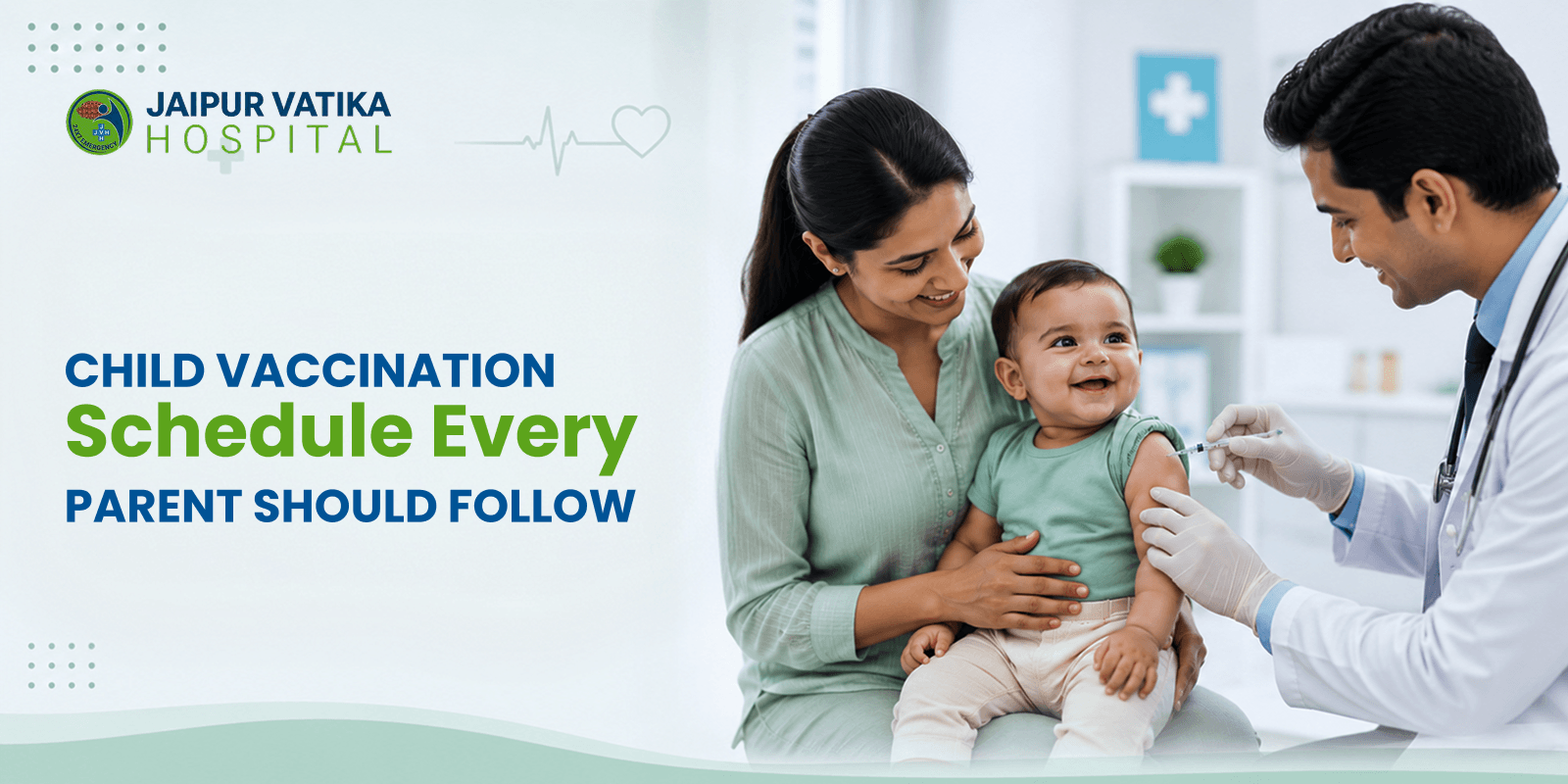
Why The Timing Of Vaccines Is So Important
Immunity takes time to build up in children. Vaccines are given at certain intervals because at certain ages the baby body can respond to vaccines well, and the vaccine is particularly effective when the child is most susceptible to being affected by the disease. Introduce a vaccine before the proper age, and the antibodies that the baby got from the mother in the womb may obstruct its effectiveness. If the child is not protected before these months, it is too late.
India has two parallel immunization programmes. The first is the government's Universal Immunization Programme (UIP) which offers basic vaccines to all children free of charge at government hospitals, Anganwadi centres and Primary Health Centres all over the country, including villages around Jaipur like Bagru, Dudu and Phagi. The second is a schedule called the Indian Academy of Pediatrics (IAP) schedule, which is the UIP schedule plus extra vaccines that are offered by private paediatricians, which provide more protection against diseases such as rotavirus diarrhoea, pneumococcal pneumonia, hepatitis A and chicken pox.
We need to remember: FREE AND AVAILABLE vaccines for UIP are available at all government health facilities. While most of these additional vaccines are recommended by IAP and are beneficial against diseases that are still prevalent in India, they may not be free.
Complete Child Vaccination Schedule (Birth to 14 years)
This is the complete vaccination schedule (a mix of the UIP and IAP recommended vaccines). Use this as a guide, but always check with your pediatric doctor in Jaipur to be sure as there may be some variations based on your child's health.
| Age | Vaccines (UIP + IAP Recommended) | Protects Against |
|---|---|---|
| Birth | BCG, Hepatitis B (1st dose), OPV (zero dose) | TB, Hepatitis B, Polio |
| 6 weeks | DTwP/DTaP-1, IPV-1, Hib-1, Hep B-2, Rotavirus-1, PCV-1 | Diphtheria, Pertussis, Tetanus, Polio, Hib, Pneumonia, Diarrhoea |
| 10 weeks | DTwP/DTaP-2, IPV-2, Hib-2, Rotavirus-2, PCV-2 | Same as above (2nd dose) |
| 14 weeks | DTwP/DTaP-3, IPV-3, Hib-3, Hep B-3, Rotavirus-3, PCV-3 | Same as above (3rd dose) |
| 6 months | Influenza-1 (annual) | Seasonal flu |
| 9 months | MMR-1 / MR, Typhoid Conjugate Vaccine | Measles, Mumps, Rubella, Typhoid |
| 12 months | Hepatitis A-1 | Hepatitis A |
| 12–15 months | PCV booster, Varicella-1 | Pneumonia, Chickenpox |
| 15–18 months | MMR-2, DTwP/DTaP booster-1, IPV booster-1 | Booster protection |
| 18–19 months | Hepatitis A-2 | Hepatitis A (2nd dose) |
| 4–6 years | DTwP/DTaP booster-2, IPV booster-2, MMR-3 (if needed), Varicella-2 | School-entry booster protection |
| 9–14 years | Tdap/Td booster, HPV (2 doses, for girls and boys) | Tetanus, Diphtheria, HPV-related cancers |
Birth to 14 Weeks: The Most Critical Early Window
The first 3 vaccines that a baby needs (BCG, Hepatitis B 1, oral polio zero dose) are best administered within 24 hours of birth, before the baby is discharged from the hospital. The BCG vaccine is effective in preventing severe TB, such as TB meningitis, which can kill infants. Prevention of mother-to-child transmission of Hepatitis B is particularly pertinent for starting Hepatitis B at birth.
Babies are given a combination vaccine at 6, 10 and 14 weeks, from this time. These include DTwP or DTaP, IPV, Haemophilus influenzae type b (Hib), Hepatitis B, Rotavirus and Pneumococcal disease (PCV). Several vaccinations are administered in a combined shot (safe and purposely formulated to be administered in one visit, for maximum early protection).
6 Months to 2 Years: Expanding Protection
The annual influenza vaccine starts at 6 months of age, and continues every flu season as the flu virus changes. The government programme has the Measles-Rubella (MR) vaccine at 9 months, with the IAP stating that it should be administered at 9 months as part of the fuller MMR vaccine that includes the mumps vaccine. Typhoid Conjugate Vaccine is also advised at this age as typhoid is still a problem in India even in less hygienic conditions.
At 12 months, the first dose of Hepatitis A is given, followed by a second dose six months later. At 12 to 18 months, children are given key booster vaccinations including the PCV booster, the first Varicella (Chickenpox) booster, the second dose of MMR and booster doses of DTwP/DTaP and IPV. These boosters are important because immunity from the first doses wanes over time and one of the most common and preventable parental mistakes is to skip a booster due to the child's apparent health.
4-14 Years school-entry and adolescent vaccines
Second doses of DTwP/DTaP (2-6 years) and IPV (2-6 years) are recommended as well as a repeat dose of Varicella if not already given, before children typically go into school. This is important because school provides a setting where a child will be exposed to other children and, consequently, to spread infections that are circulating.
Two additional vaccines are relevant from ages 9-14 years. Tdap or Td boosters continue to provide protection against tetanus and diphtheria. In both girls and boys, HPV vaccination administered at this age is 2 doses that immunize against some cancers later in life, such as cervical cancer, and is most effective if given before exposure to the virus.
What If a Vaccine Dose is Missed
It is very common for people to miss their vaccine visitations, and this shouldn't create a panic or make them want to start the vaccine schedule over. Paediatricians use what is called a catch-up schedule, which means that missed doses will be taken up from where they were missed and dosing intervals will be adjusted as per the child's age at the time of the missed dose. The only true error that can be made is to delay the catch up itself. The longer a child skips a dose, the longer they are not protected against that disease.
In case of missing a dose: Please contact your paediatrician as soon as possible (not for the next scheduled appointment). Take the vaccination card (Mother and Child Protection card) to the doctor to see what has been administered and to determine the best catch-up schedule.
What Is Normal After A Vaccine, And What Isn't.
Fussiness, mild fever, or tenderness at the injection site, in the day or two after a vaccine is given, are normal immune responses and not signs that something is amiss. If recommended by your GP, they will tend to recover on their own with rest, fluids and Paracetamol. Applying a cool compress to the place of the injection may help relieve any swelling.
- If your child experiences any of the following please contact their doctor quickly:
- High temperature above 38.5°C,
- Excessive sleepiness and unresponsiveness,
- Long periods of inconsolable crying (more than a few hours) or any of the following signs of an allergic reaction
- Difficulty breathing and swelling of the face.
These reactions are very uncommon, occurring in less than 1/1,000 patients and should be monitored immediately if they do occur.
There is a lot of research into common misconceptions about vaccines, such as that vaccines cause autism, as well as a belief that multiple vaccines given together overload the baby's immune system.
The WHO estimates there are millions of deaths prevented each year through immunization worldwide, and a baby's immune system can cope with exposure to normal food, air and bacteria much better than it can cope with vaccine shots.
How The Right Pediatric Hospital Makes a Real Difference
Vaccination is not just one vaccine, it is your child's lifelong relationship with a doctor, ensuring you are aware of any potential developmental issues at an early stage and maintaining your child's immunisation record on track via dozens of trips. A best child hospital in Jaipur should provide more than just the injections. Check if the child specialist hospital in Jaipur keeps digital or physical immunisation records, has a system for sending reminders for appointments, carries out a holistic review of growth and development during every visit - not just the vaccine card, and carries out both UIP and IAP recommended vaccinations.
Vaccination care and newborn care hospital in Jaipur are also important for families who are working with a newborn. If the baby has been born early or is of a type that has a health concern, they will be able to adjust the timing of vaccines as necessary, which can be done by the same physician who has been following the baby since birth, not a different doctor.
Dr. R.S. Rinwa (MBBS, DCH) is the Director of the Pediatrics & Neonatology department at Jaipur Vatika Hospital, located on Jaipur-Ajmer Expressway at Thikariya with 40 years of specialized experience in paediatrics. The department offers complete child vaccination in Jaipur under the National Immunisation Schedule as well as additional vaccines suggested by IAP without requiring families to visit various locations for different immunisations.
In addition to the vaccines, the department provides a variety of other child healthcare services: a Level-II NICU for babies who require extra support, growth and development monitoring, management of seasonal illnesses that are prevalent in Jaipur's rainy months, and adolescent health counselling.
For families residing in Bagru, Dudu, Phagi and the western belt of Jaipur, the convenience of having a pediatric hospital in Jaipur right on the main highway makes it possible to take them for vaccinations, growth checks and any other urgent paediatric issue to the same convenient place without having to make a long journey to the city centre.
Conclusion
A child's vaccination program begins at birth and continues to the age of adolescence, with each vaccine administered to provide protection against a certain disease at the time a child is at greatest risk of contracting the illness. Often, a missed dose can be easily caught up, but not a missed dose the sooner the missed vaccine is caught up, the shorter the time the child is unvaccinated.
Children are provided with full vaccinations, growth monitoring, and support for newborns from birth to adolescence on the Jaipur-Ajmer Expressway at Thikariya by the Pediatrics & Neonatology department at Vatika Hospital, Jaipur. For your child's next vaccination/s or a complete health check up please book an appointment in the JVH E-Consultation App or call the helpline on +91-8209809753.
faq.faqs
faq.faqs-subheading
Three vaccines are due within the first 24 hours after birth, before the baby leaves the hospital: BCG (bacillus calmette cure prevents severe tuberculosis), oral polio zero dose and the first dose of Hepatitis B (also known as H1N1 vaccine prevents mother-to-child transmission). Vaccines like these three are the backbone of the child immunization program in India and are free of cost at all government and most private hospitals, even in Jaipur.
It is not necessary to begin the vaccine series again if the dose is missed. If they have missed any doses, paediatricians will take a structured approach to catch up, starting missed doses at the appropriate time (as per the child's age) based on the previous dose schedule. It's not about waiting for the next child's appointment, but rather contacting a paediatrician as soon as you know that the dose was missed, so that a child doesn't have to miss any more doses.
Government (UIP) vaccines are available free of cost at government health centres and contain BCG, Hepatitis B, Polio, DPT, Hib, MMR, PCV and Rotavirus which are the most important vaccines for India. IAP recommended vaccines is the same vaccines plus an extra layer of security from chickenpox, Hepatitis A, typhoid, influenza and HPV, vaccines which are available from private paediatricians. Both schedules are scientifically valid, the latter providing more comprehensive coverage for families that can avail of it.
Yes, some slight fever, fussiness, or discomfort at the injection site within a day or two after being immunized is a normal part of the immune system's reaction and development of immunity. This will typically resolve on its own with rest, fluids and Paracetamol when prescribed. If your child is very sleepy or the fever is very high, or symptoms are more prolonged than normal, seek your doctor's advice as soon as you notice them.
Two doses of HPV vaccine are recommended for girls and boys between the ages of 9 and 14. Early adolescence, before typical virus exposure, is best, as it is most effective prior to exposure to the virus. The vaccine is effective in preventing a number of cancers in adulthood, such as cervical cancer, and is one of the most effective cancer prevention vaccines available.